
Being on the List Isn't Winning

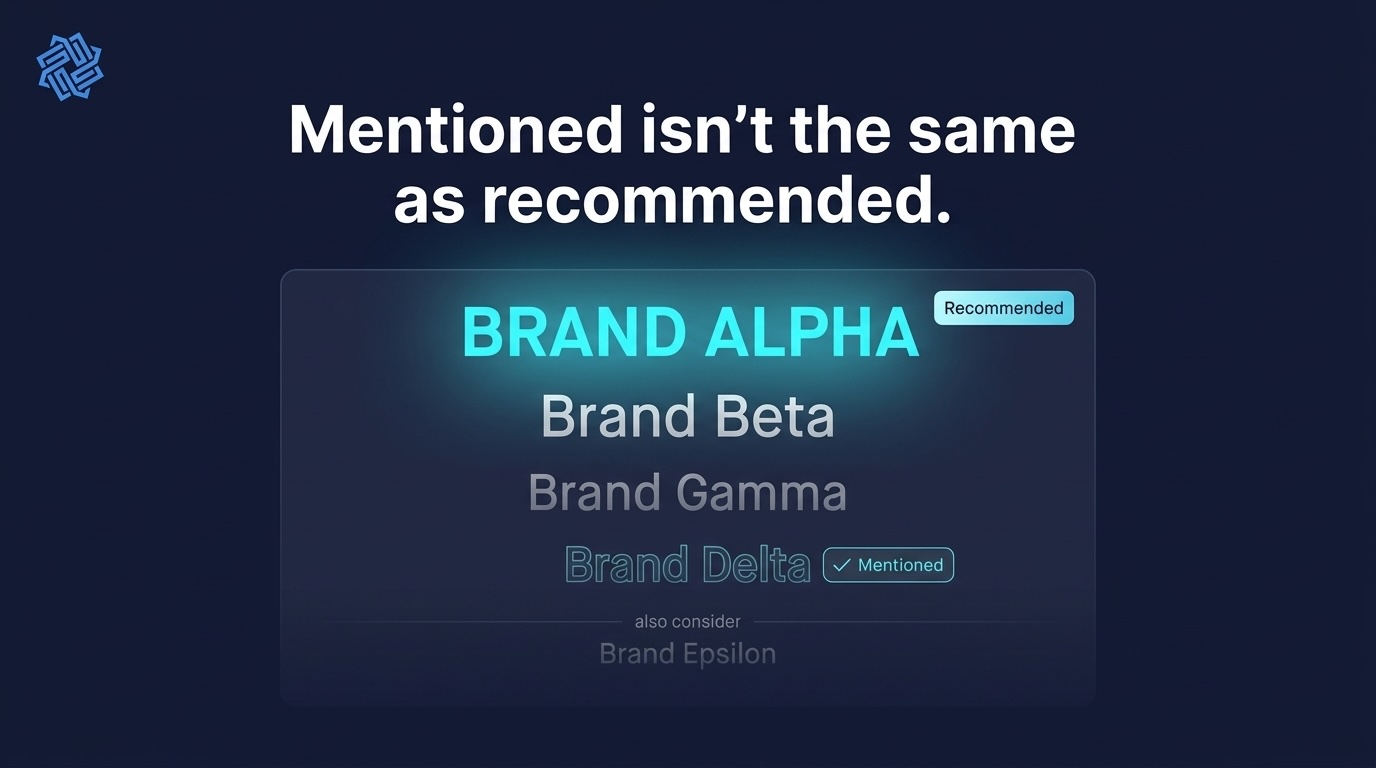 A brand mention buried third in a five-item AI-generated list and a brand named as the single clear recommendation produce completely different buyer outcomes, but most AI visibility tools score them the same way: mentioned, yes/no.
That binary hides the metric that actually matters.
Position inside the answer, not just presence
When an AI model answers a comparison-style question, it doesn’t just list options neutrally. It usually leads with one, frames the rest as alternatives or runners-up, and sometimes explicitly says “but if you want X, go with [competitor] instead.” Getting swept into the “also consider” tail of that answer is a fundamentally worse outcome than being the lead recommendation, even though both count as a “mention.”
| Position in the answer | Buyer impact |
|---|---|
| Named as the top/only recommendation | Treated as the default choice |
| Named first among several options | Treated as a strong contender |
| Named in a longer list, no distinction | Easy to skip past |
| Named only as a caveat (“unless you need X”) | Framed as the fallback, not the pick |
Why this gets missed
Most tracking dashboards report a mention rate or share-of-voice percentage. That number goes up whether you’re the clear winner or the fourth name in a list nobody reads to the end. Two brands with an identical “80% mention rate” can have completely different actual outcomes with real buyers.
What to actually track instead
Look at how you’re being framed when you do appear, not just whether you appear. Are you the model’s default pick for the query, or the safety-net alternative it mentions to cover its bases? That distinction is the one worth optimizing for, and it requires reading the actual answer text, not just a mention count.
beket.ai scores where you land within the answer, not just whether you’re in it, so “we got mentioned” doesn’t quietly stand in for “we’re losing the recommendation.”
Related posts
AI Checkout Was Supposed to Replace Recommendations. Here's What Happened.
OpenAI's in-chat checkout stalled at roughly 30 live merchants and got shelved in March 2026. Here's what actually took its place, and why it raises the stakes on accuracy, not lowers them.
Your Catalog Is About to Have Customers You Never Meet
Shoppers now ask AI what to buy. For most stores, what the AI answers is a complete blind spot.
Your Competitor Is in the Same Answer as You
Share of voice used to mean rank position. Now it means who the model names next to whom.