
Citations Decay. Plan For It.

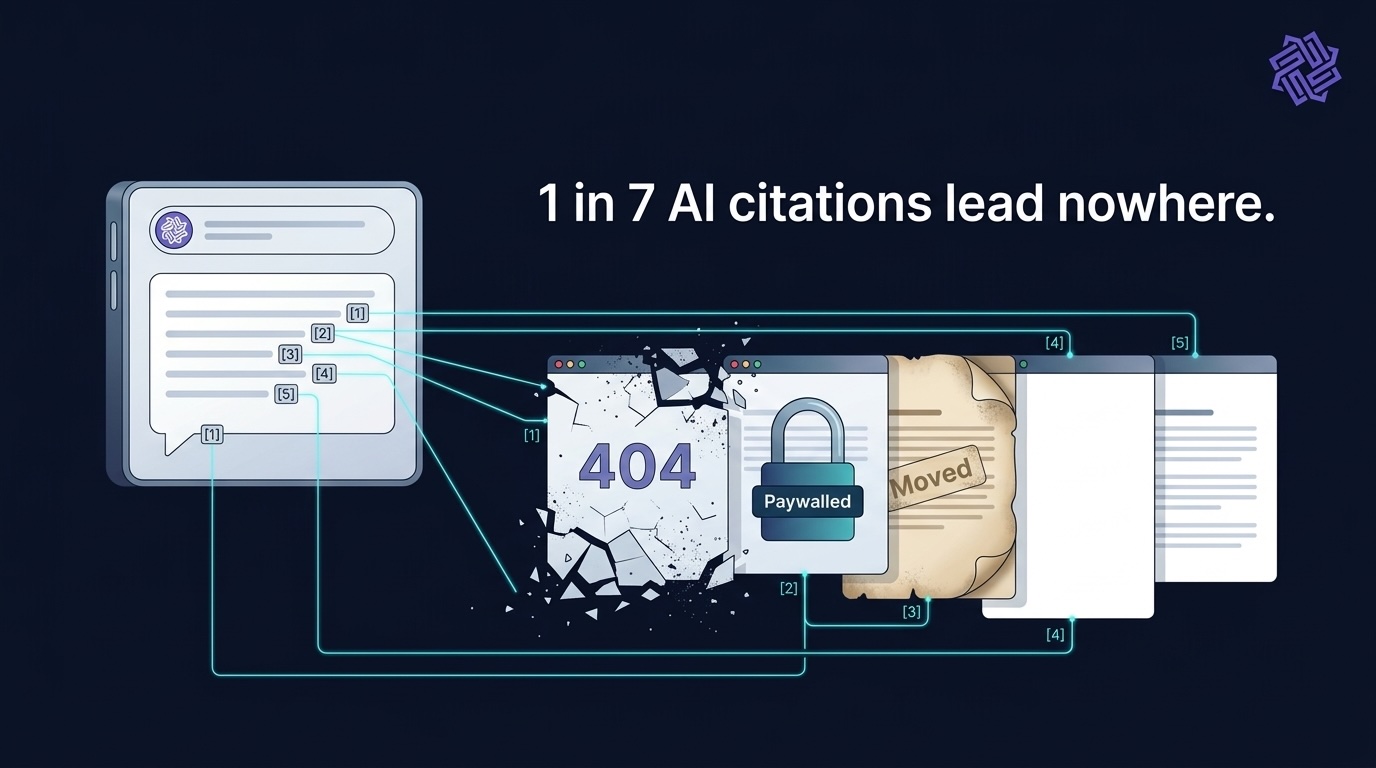 A citation is only as good as the page it points to. Pages get moved, deprecated, paywalled, or quietly deleted all the time — and an AI model doesn’t automatically know that. It can keep citing a source that no longer exists, or that now says something completely different than when it was first indexed.
How much of this is actually happening
Across the citations we’ve checked in our own audits, roughly 1 in 7 (about 14.6%) resolve to a dead link. Nearly three-quarters, about 73.7%, don’t hold up as genuinely relevant to the claim they’re supporting once you actually check the destination.
| Platform | Dead link rate | Not relevant rate |
|---|---|---|
| Perplexity | 14.9% | 66.5% |
| ChatGPT | 14.0% | 76.9% |
| Google AI Overview | 14.7% | 77.4% |
| Google AI Mode | 25.3% | 85.4% |
| Microsoft Copilot | 9.9% | 74.7% |
That’s not a minor footnote. It means a meaningful share of what looks like sourced, credible AI output is quietly resting on links that don’t actually go anywhere useful anymore.
Why this matters for your own brand’s citations
If a page about your business gets cited today, that citation has a shelf life. Old press releases, discontinued product pages, or a blog post you deleted during a site redesign can all still be sitting in a model’s citation graph, actively misinforming anyone who checks the source.
The plan, not just the problem
Treat citation decay like link rot management, because that’s exactly what it is: periodically check what’s being cited about you, verify those links still resolve to accurate, current pages, and if you’re taking a page down, consider a redirect instead of a dead end — both for your own SEO and for whatever’s still citing it elsewhere.
beket.ai verifies whether the sources cited about your brand actually resolve and remain accurate, so you catch decay before a prospect does.
Related posts
Your Bilingual SEO Checklist Has a Blind Spot
Canadian buyers now ask agencies about French coverage. Almost nobody asks whether the AI answer is accurate in either language.
Every Wrong Answer Has an Address
AI does not just misrepresent your brand. It gets that misrepresentation from somewhere specific.
The Nonprofit Website Checklist Skips the Reader That Matters Most
Homepage, About, Donate, Volunteer, Events. Every nonprofit website guide lists the same pages. None of them mention the AI model reading them.