
An Ad in ChatGPT Does Not Buy the Answer

Ads have arrived in ChatGPT. They spread fast. They do not touch the answer.
OpenAI began testing ads on February 9 for adult users on the Free and Go plans in the U.S. A self-serve ads manager followed on May 5. Paid plans such as Plus, Pro, and Business stay ad-free.
How fast the ads spread
A panel study of U.S. desktop users tracked how many retail conversations showed a sponsored ad. The numbers climbed fast.
| Category | March | April | May | June |
|---|---|---|---|---|
| Video games and consoles | 3% | 3–4% | 18% | 47% |
| Toys and hobbies | 5% | 12% | 14% | 24% |
| Books, music, and video | 9% | 12% | 8% | 22% |
In June, nearly half of tracked gaming chats carried an ad. That was the first full month after self-serve buying opened.
Chart: share of U.S. desktop ChatGPT retail conversations with a sponsored ad. Data: Comscore Q2 2026 AI Intelligence Report.
Two slots, two jobs
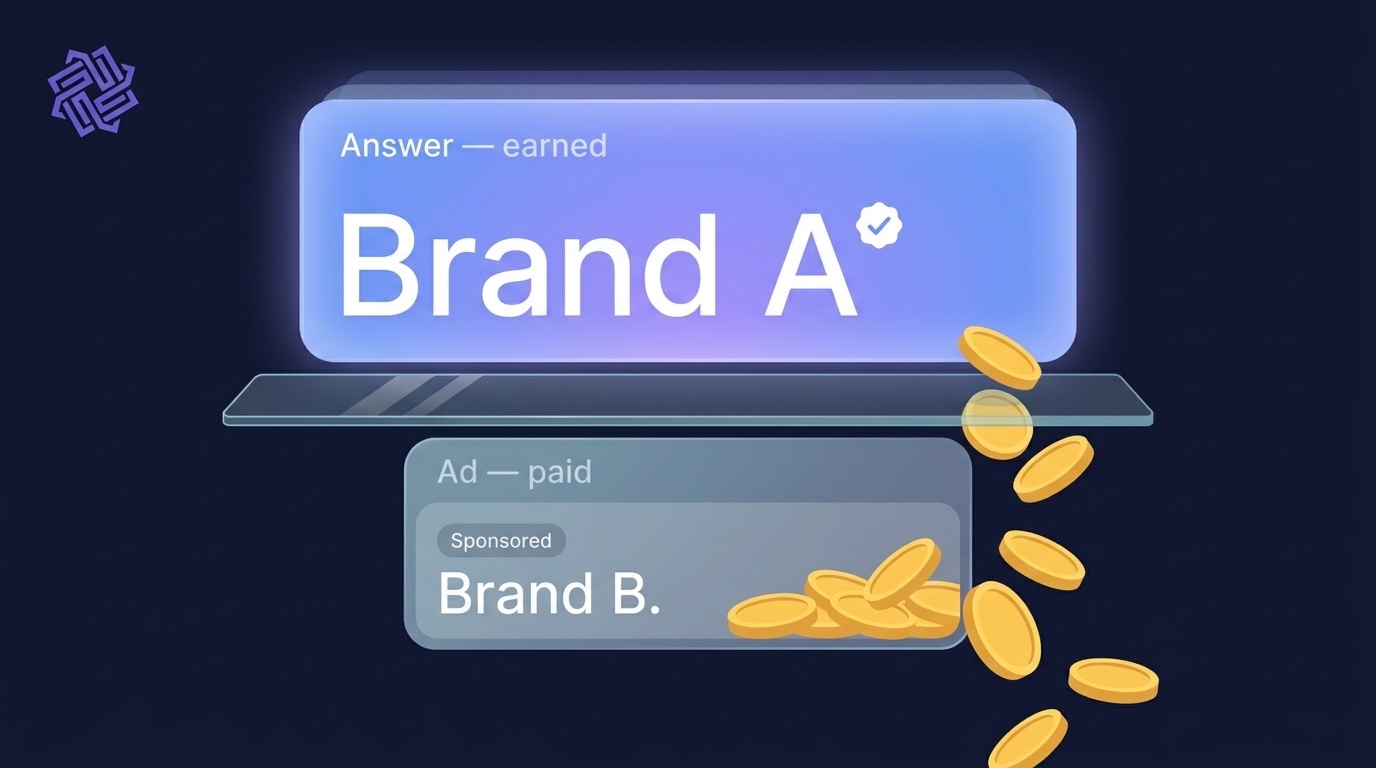
The ad sits below the answer. It is labeled. OpenAI says ads do not inform the answer.
So one conversation now holds two slots. The answer is earned. The ad is paid. Two different brands can fill them. A rival can win the answer while you pay for the ad beneath it.
The ad reaches a buyer at the right moment. The answer tells that buyer who is best. Most people trust the answer more.
Money buys the second slot. It cannot buy the first.
What the earned answer rewards
The first slot goes to the clearest evidence. A 2026 university audit shows how that works on one platform. Researchers ran 10,000 questions through Reddit’s AI search three times. They traced 30,000 answers back to 14.68 million comments.
The patterns were sharp:
- Comments ranked high by votes had 2.88 times the odds of being picked.
- The median picked comment sat at the 91st percentile for score. Skipped comments sat at the 45th.
- A more formal comment had 49% higher odds.
- A comment with an outside link had 2.25 times the odds.
- First-person words fell from 3.3% in the quoted comments to 0.06% in the answers.
The system picked what was plain, visible, and backed by a source. It stripped out the personal story.
Your own pages face the same test. A moving company that does cross-country moves but never says so will not be named for cross-country moves. The model does not guess. It repeats what it can find.
Measure the answer, not the ad
Ad platforms report reach and clicks. Nothing reports what the answer says about you. You have to check it.
Use three measures:
- Presence. Are you named for the questions buyers ask?
- Accuracy. Are your prices, services, and locations right?
- Share. How often are you named beside each rival?
Pick 20 to 40 real buyer questions. Run them in each AI tool with the same settings. Repeat for one to two weeks. Look for gaps that return, not one bad answer.
Then fix your own pages. State each service plainly. List prices and service areas. Make sure crawlers can reach the pages. Match what outside sites say about you.
Run ads if they fit your goals. Just do not confuse the two slots.
beket.ai checks the earned slot for you. It asks ChatGPT, Gemini, and Perplexity your buyers’ questions, scores each answer against your real data, and fixes what it can. See what the answer says at beket.ai.
Related posts
The Question Every Business Should Be Asking Right Now
Most businesses assume they're visible because they have a website. Here's a simple test that will tell you if AI models actually know you exist — and what to do about it.
Cited or Invisible: Why AI Search Has No Middle Ground
In traditional SEO, ranking third still gets you clicks. In AI search, you're either in the answer or you don't exist.
Ads Just Moved Into the Answer Box
ChatGPT ad penetration jumped from a rounding error to nearly half of US responses. Your citation now shares space with a paid slot.